Whether it be a specific time at which the lesson must take place, a specific venue that limits the number of students allowed, or the format in which the lesson must be taught. These and other aspects go away when the studies are transferred to a virtual environment.
Given that online training is remote, the teacher does not need to commute to a specific location to teach. The virtual environment means that the teacher is video calling with the students - it can be done from anywhere as long as the teacher has the necessary equipment and a stable internet connection. Be it a living room, a country house, or the middle of a lake. The teacher is relieved of the burden of a particular location, and as a result, can enjoy the process more. In addition, by effectively planning the day, the teacher can accept more students than they could in person. This means that the knowledge is given to a broader audience, and the teacher can also earn more.
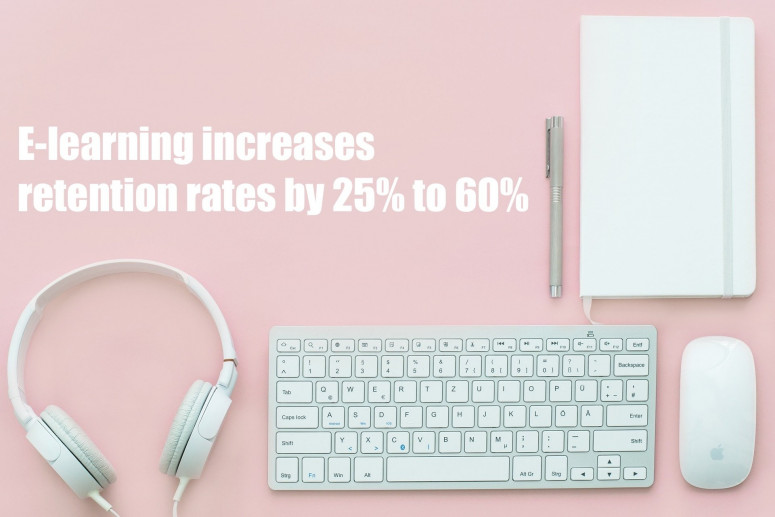
Teaching online also allows the teacher to play with the format or training type through which they want to pass the information to the student. It can be a simple video call between the student and the teacher, or it can be more interactive - regular tests that check their knowledge or the use of apps and videos that transfer knowledge to the student in a more engaging and effective way.
Apart from the above reasons, two essential aspects make online training more valuable than in-person. First, they are available to anyone - both student and teacher. A person with a movement disorder may find it challenging to get to the in-person class location, or the disorder can even be at such a level that it is impossible to reach it. It is this aspect that disappears if the classes are taught in a virtual environment. Both students and teachers with mobility impairments can feel free, comfortable and safe knowing that they are not prevented from acquiring or passing on knowledge.
Second, learning in a virtual environment is a more environmentally friendly solution. All teaching materials that would be printed and distributed to students in in-person classes are transferred electronically in the virtual environment. If a person no longer needs them after a day or two, they can delete them with a few clicks without unnecessarily polluting the environment by throwing out the paper. However, it is not only the paper used for materials - but it is also pollution that is not caused by vehicles because neither the student nor the teacher needs to move unnecessarily.
It becomes clear that a teacher who passes on their knowledge directly in the virtual environment can leave a bigger and more positive impact on both the environment and the future. Each person's experience may be different, but one thing is clear: it will not be possible to enjoy the benefits that online training can provide without trying it!


